MS 192 TC starting problems when mildly warm

Oh well I thinking the OP used the Stihl's gasket and diaphragm kit which has no inlet needle valve. It so it sounds like a leaky one that is leaking under fuel tank pressurization. If so then the OP needs the Zama RB-69 full carburetor repair kit as the needle valve tip is probably ringed worn.
I replaced the needle valve. The old one looked good, but my eyes aren't good enough to see microscopic wear, and since I had a new one, I replaced it.
 
Last edited:
I chased a very similar problem on an old leaf blower once. And it turned out to be the main fuel line from the tank to the carb. When it was cold, the line was fine. But after the engine ran for a bit and everything got warm, the old rubber line would get a little too soft and could collapse or get a tiny air leak when I tried to start it. It wasn't getting enough fuel. A new fuel line for a couple of bucks fixed it completely.
It might be something to check next time it acts up. When it's warm and won't start, just take a quick look at that fuel line to see if it looks soft or pinched.
This sounds like the most likely cause. I'll have to check that. I seem to remember from when I rebuilt the carb that the fuel line was molded. Is that the case? Or will generic fuel line work?
 
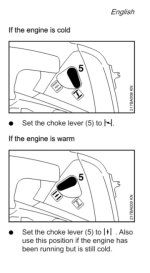
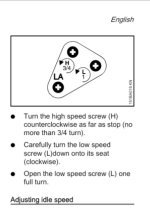
Are you just setting the high and idle screws per the instructions or have you adjusted while running. If you know the difference between a four stroking and two stroking two-stroke sound when running, good. If not, experiment by richening the mixture and you'll hear a definite change in the sound. The manual setting is ballpark, the real tuning comes while running and adjusting. Generally if the idle is a bit too lean it's a bear to start when warm.
1000013679.jpg1000013681.jpg
 
I have the above chainsaw. Last year, it was hard to start all the time, so I rebuilt the carburetor with an OEM rebuild kit. It then became easy to start cold and hot. When cold or hot, it starts just as it should. When it's in between cold and hot, though, it can be very hard to start. Typically, if I start it within 10 minutes of using it, it starts fine. After 30 minutes, it will be hard to start. After an hour... I usually have to go get my big saw, because this one won't cooperate.

What causes this?

My premix is ethanol-free 87 octane mixed with Echo Red Armor oil, which has fuel stabilizer. I store my premix in reused Trufuel quart cans. I mix a gallon at a time, which typically lasts me about a month. I have full confidence in my fuel. It works fine in all my 2-cycle equipment, including this saw, except in certain conditions.
Should be using 89 octane or better. Low octane in 2 cycle will make machines run hotter. Not because I say so, I saw proof, a piston caved in, dealer showed me. Also I use a marine conditioner all year long,1oz. per gallon. During weather changes you might want to try adjusting jets richer. Or use the higher octane fuel might fix your problem. Check for air leaks' retorque the carb.
 
http://www.faqs.org/faqs/autos/gasoline-faq/part1/

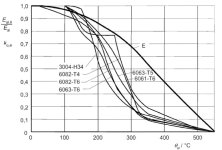
Octane has zero to do with BTU produced. Gasoline has 42 - 44 MJ/kg. iso-octane has 44.374 MJ/kg. Virtually the same. The only reason octane is in the mix is to slow the flame front down to controllable rate to prevent detonation in high compression engines. That is all it does. By any measure you care to make, two stroke gasoline engines are not high compression, especially port induction engines which will struggle to achieve 7:1 compression ratio at best, most lower. Your "proof" is anecdotal. Most likely the carburetion was very lean leading to an aluminum series, most likely 6061-t4 that lost its strength above some critical level based on its composition. Note the rapid thermal degradation of aluminum in the attached graph. Two strokes have twice the thermal input per given RPM thus margins are lower.
 

Attachments

  • 3000-6000-elevated.jpg
    3000-6000-elevated.jpg
    76.4 KB · Views: 4
Back
Top