You are using an out of date browser. It may not display this or other websites correctly.
You should upgrade or use an alternative browser.
You should upgrade or use an alternative browser.
Briggs and Stratton Warped PLASTIC Intake Manifolfd
- Thread starter mxsmith4
- Start date

AmenI agree. Bring back the Briggs Lhead twin engines.

Neo7
Well-Known Member
That's all good but these are just lawnmower engines and many people working on them don't have such tools (yes I do). The problem is really with Brigg's choice of materials and not the guy just trying to get his mower going.If some of you learn what an in/lb wrench is for would help. Carb to manifold 65 in/lbs (5.4 ft/lbs); Manifold to cylinder head 80 in/lbs (6.7 ft/lbs). Over tightening the screws is a leading cause of the warpage. Yes heat plays a part too.
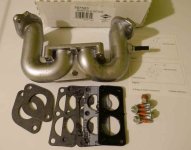
Anyway one Aluminium Manifold is now a quarter the cost of a whole replacement engine, so a tried and tested method of plastic manifold repair makes a lot of sense.
Last edited:
Neo7
Well-Known Member
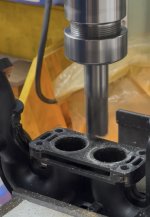
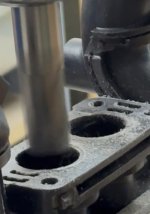
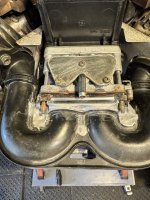
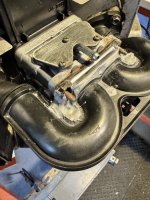
Ok Guys, I was not keen on sanding that flat surface so a trip to the machine shop is how I fixed up my plastic manifold … I then treated the plastic with Loctite 770 and used Caster Epoxy (and two stainless steel rods) across (bridging) the gaps to ensure the mating surface stays flat in the long term. I also filled in those 4 holes on the flat surface with the Epoxy too. I can't see why B&S would want those holes there... except to intentionally cause failure at a later date.
Attachments
Last edited:
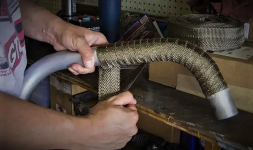
Put header wrap on the exhaust if you are worried about plastic parts warping.yes i do agree there they could also put a thicker heat shield on it the Exhaust right below it the tin the use is useless
Or a heat gun clamped to a flat surface. Not the end of the world guys.I'm kinda surprised that no one here has tried to sandpaper the plastic manifold flat? ... I'm just trying to find out if that actually holds up over time?

Craftsman Garage
Well-Known Member
Ideally this would work, but this would make the intake not line up with the engine shroud and maybe also some linkage problemsMake your own wooden carb spacer. Keep the heat off the plastic. Old school car racer trick. More plenum volume and insulate the carb from percolating the fuel.
Craftsman Garage
Well-Known Member
Wow, I didn't know that spare part floating around in my shed was worth that much!That's all good but these are just lawnmower engines and many people working on them don't have such tools (yes I do). The problem is really with Brigg's choice of materials and not the guy just trying to get his mower going.
Anyway one Aluminium Manifold is now a quarter the cost of a whole replacement engine, so a tried and tested method of plastic manifold repair makes a lot of sense.
Craftsman Garage
Well-Known Member
While we are on the topic of briggs manifolds, does anyone know what this port on the side of the intake is for?