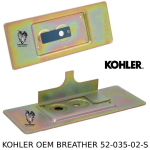
crankcase high pressure

sparkyjoe

Member
I have a 1986 gravely with a rebuilt kohler kt17. new rods, new pistons and rings, new valve guides and new valves. heads totally redone.
new carb and new coil and points. i keep blowing crankshaft seals left and right due to high crankcase pressure. engine will only run if choke is totally closed. need info. im 81 years ols but still spinning wrenches thx
 
sounds like you have both a problem with crankcase pressure and a problem with intake leakage or a lean fuel delivery. You'll need to do a leakdown test to find where the excess pressure is coming from. You might also want to look at the hoses off the crankcase to the air cleaner to see if one is in the wrong place or plugged up. That breather should dump the crankcase pressure long before the seal gets blown.
 
About 10 years ago I had this same problem and found that the oil return ports into the crankcase, behind the seals, were plugged. This would allow oil pressure to build up, blowing out the seal. Luckily I was doing this repair at home so I didn’t have to charge shop rate for 10-12 hours or labor to find and solve this problem. Here is a manual for your engine. https://mymowerparts.com/pdf/Kohler...hler-Service-Repair-Manual-KT17-KT19-KT21.pdf
 
Are you sure the piston rings were "clocked", so the end gaps did not align with each other?


Next possibility is the breather hose between the carburetor and block breather is pinched shut or blocked internally not allowing air displacement in the block.

On this old engine, it is possible it has a failed, broken or choked up crankcase breather. These have a tempered spring steel vibratory flap that fails from metal fatigue.

When they fail crankcase pressure is not regulated so it builds up and the seals get forced out.

1778894843924.png
 
positive rings are clocked. new breather hose tube from crankcase breather to carb, also new breather assembly, as for the carb its new intake manifold sealed good
 
Is it possible to install the breather valve upside down? Some have tiny drainback holes that need to be at the lower side/end. If upside down, they can essentially fill with oil to the point they no longer flap back and forth as needed.
Another thought is the seal on the dipstick. If the cap is screw on, most likely hit has an O-ring seal which must be installed or pumping will occur. Also the dipstick tube must be well sealed(another O-ring in some cases) or leakage and pumping can occur.
There's a pressure pulse on the piston down stroke, and a vacuum pulse on the piston upstroke. If excess air can get in during the upstroke, it is there to raise pressure on the down stroke, so limiting air intake is key.
tom
 
Back
Top