A couple of things.... Based on the info you've provided, I believe your engine likely has the stator for a Tri-Circuit type alternator. I say this because it puts out 28VAC and has to provide more than 3A. If it was just the simple DC 3amp output type, as Bert said, this couldn't be used on a machine with an electric clutch PTO. The Tri-Circuit system puts out a total of 9-10 amps, but typically uses two 5amp circuits. The single black wire from the stator goes to a connector. The other side of the connector goes to 2 diodes. Each diode powers part of the total load, hence keeping things manageable. Having said that, how does this relate to what you actually have?
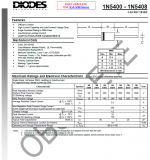
First, I am unaware of a single B&S alternator system that ever uses diodes in series. Clearly someone has "fat fingered" your system. The only time one ever puts diodes in series is to double the voltage rating. It does nothing for the current rating. No need for this in a small engine environment as higher PIV(peak inverse voltage) diodes are readily available. Also for those that mentioned it, NEVER place diodes in parallel unless a series dropping resistor is used in series with each diode. (This is because the voltage drop across a conducting silicon diode is approximately 0.6 volts and rarely are two diodes exactly the same. The one with the higher drop will 'fight' the other one, kind of like connecting two batteries with different voltages in parallel) You'll never have to do this in the small engine world! [I am an electrical engineer FWIW :-]
Your original post asked the question about replacing the diode(s) with a regulator. Well you can with Briggs part number 794360 regulator/rectifier. Knock-offs on Amazon are < $20. Better choice than a diode for heat sinking reasons(not electrical reasons). [take a look at the B&S Engine Alternator Repower Guide to learn everything you'll need to know and then some about their various stator and alternator types, color codes, specs, etc. I find it invaluable!]
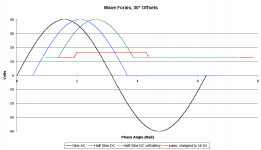
(Richard, these small engine systems don't use caps for 'smoothing' like a conventional linear power supply. They rely on the fact that the battery itself behaves like big fat cap. Likewise, there are no ballast resistors or other components like that. These systems are simple. AC voltage is sourced from the stator that may be used directly or rectified by a diode or rectified/regulated by a 'module'. That's it. Take a look at the Repower Guide I mentioned above. It's a great resource!)
Good luck!