Kohler SV-601 - Fresh soot around crankcase closure plate

cmayo

Active Member
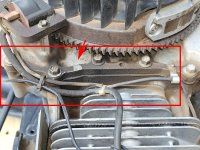
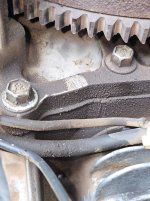
This is a 10-year-old Kohler SV-601 20 HP engine on a 2016 Troy Bilt lawn tractor. I'd just finished maintenance and degreasing the engine, so all the soot shown in the attached photos is from operating the mower without the blower housing for about an hour in a *very* dusty area. Any idea where the soot is coming from? I gave it a light wipe with a fingertip (arrow) and it comes right off. During maintenance I found that the bolts securing the cover plate were loose (again) so I tightened them back down, but they were still tightened down after the soot appeared.

Any ideas?
 

Attachments

  • Closure Plate Soot 20260730_165921.jpg
    Closure Plate Soot 20260730_165921.jpg
    424.1 KB · Views: 9
  • Closure Plate Soot 20260730_165948.jpg
    Closure Plate Soot 20260730_165948.jpg
    483.3 KB · Views: 8
Why would you run the engine without the blower housing? For any extended time. That would be like running your car without coolant in the radiator. The blower housing directs the air from the cooling fins on the flywheel over the fins on the cylinder to cool the engine.
 
Hello C.,
Why would you run the engine without the blower housing? For any extended time. That would be like running your car without coolant in the radiator. The blower housing directs the air from the cooling fins on the flywheel over the fins on the cylinder to cool the engine.

Why would you run the engine without the blower housing? For any extended time. That would be like running your car without coolant in the radiator. The blower housing directs the air from the cooling fins on the flywheel over the fins on the cylinder to cool the engine.
Hello H.,

I think this was found while cleaning the cooling fins.


These are known as "bucket" motors because of the top closure plate design. This is not "soot" it is dirt that has collected onto oil migration due to weak assembly RTV sealing.

Clean the area and tighten the bolts down and see if at least slows down the problem.

I don't see this being a serious enough problem to disassemble the engine reseal the case but keep your oil level full.

Modern designs like this are not made to last like the older engines.
 
Hello C.,


Hello H.,

I think this was found while cleaning the cooling fins.


These are known as "bucket" motors because of the top closure plate design. This is not "soot" it is dirt that has collected onto oil migration due to weak assembly RTV sealing.

Clean the area and tighten the bolts down and see if at least slows down the problem.

I don't see this being a serious enough problem to disassemble the engine reseal the case but keep your oil level full.

Modern designs like this are not made to last like the older engines.
All those engines I ever worked on had a closure plate gasket.
 
This is a 10-year-old Kohler SV-601 20 HP engine on a 2016 Troy Bilt lawn tractor. I'd just finished maintenance and degreasing the engine, so all the soot shown in the attached photos is from operating the mower without the blower housing for about an hour in a *very* dusty area. Any idea where the soot is coming from? I gave it a light wipe with a fingertip (arrow) and it comes right off. During maintenance I found that the bolts securing the cover plate were loose (again) so I tightened them back down, but they were still tightened down after the soot appeared.

Any ideas?
Thanks for the input, guys. Oil has always collected here and each time I've noticed it in the past, the front bolts on the closure plate needed tightening. This time, I'd just cleaned the area and tightened the bolts, so I was surprised to see oil collecting there so quickly. Oh well, keep the oil topped off and the bolts tightened, and maybe I'll coax another ten years out of this little motor. Cheers!
 
A drop of red Loctite on cleaned bolt threads will help keep them from loosening. If they keep coming loose the main block will develop a stress crack and that would not be good.
 
According to the manual for my Kohler Confidant engine,

"A partial vacuum should be present in crankcase when engine is operating. Pressure in crankcase (normally caused by a clogged or improperly assembled breather) can cause oil to be forced out at oil seals, gaskets, or other available spots.

Crankcase vacuum is best measured with either a water manometer or a vacuum gauge. Complete instructions are provided in kits."

I bought the mower with this engine used. It's a commercial engine, and looked to have been used hard. I fought oil leaks for the first 3 seasons. I finally have them fixed. I think I had bad head gasket(s), which would create crankcase pressure, which would blow oil past the seals. During the last off-season, I replaced the head gaskets, main seal, and resealed the oil pan and valve covers with fresh RTV. For the first time, it doesn't use oil, and the engine and engine bay isn't getting covered with oily dirt. I have a few areas I mow under trees which don't have a lot grass. These areas kick up a lot of dust, and I've been fighting oily dirt buildup since I bought it... until this season.

I recommend getting a vacuum gauge, and measuring crankcase vacuum. I wish I'd done that before doing the "mini-rebuild". I recommend this one. It's only $25. My crankcase vacuum is good now, but I don't know what it was previously.
 
This is a 10-year-old Kohler SV-601 20 HP engine on a 2016 Troy Bilt lawn tractor. I'd just finished maintenance and degreasing the engine, so all the soot shown in the attached photos is from operating the mower without the blower housing for about an hour in a *very* dusty area. Any idea where the soot is coming from? I gave it a light wipe with a fingertip (arrow) and it comes right off. During maintenance I found that the bolts securing the cover plate were loose (again) so I tightened them back down, but they were still tightened down after the soot appeared.

Any ideas?
My friend, do NOT run the engine without the top metal engine shroud installed. These are AIR COOLED ENGINES. That shroud directs cooling air around the block and head/s for cooling.

Same as running a car engine without coolant for an hour in dusty conditions.

YES, cleaning the cooling fins is a YEARLY or more often maintenance item. Put the shroud back ON.

No cool air and you get engine damage.
 
Last edited:
Back
Top