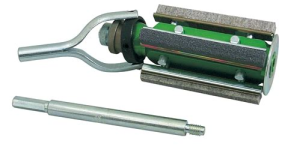
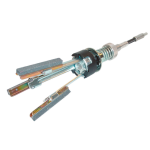
when a cylinder is honed to an oversize, it is not just the steel that wears away. The stone wears too as the cylinder is honed. There is an optimal overstroke on the honing that has to be maintained to keep the stones wearing even. If the stroking of the hone is not proper (which is probably impossible without the right equipment), the cylinder will have a taper in it, or might end up like an hourglass. That will cause two problems, (1) the clearance between the cylinder and piston will also vary so it will be from too loose to too tight. (2) The rings will work open and close as the piston goes up and down thru that taper or hourglass. That will wear the ring lands very quickly and eventually wear the rings away or break them. It might not burn oil, and have lots of power leaving the shop, but it will die much sooner than one expects.
When I did this for a living, boring engine blocks and racing blocks daily, the hone had a very sensitive amp meter on it. As the stones move thru the cylinder, and the cylinder size varys, the meter will show the variance in the current the honing system is drawning. It will draw more as the cylinder gets tighter and vs versa. I would vary the stroke length, and placement in the stroke length to keep the cylinder straight. The clearances we are dealing with here are very small. So I would not hone a cylinder oversize by hand, ever. The cylinder walls will never be as straight as they need to be. That said, the cylinders on throwaway aircooled mower engines flex more than a car. One has to take that into consideration too because the hone will just ballon the cylinder as it passed by the weak spots, instead of cutting.
here is a Youtube of a Sunnen CK10 taking a cylinder oversize.