Wow, I never thought of that, how does it kill the engine, does the metal fragments get into the cylinder or valve area or the carb or just everywhere? I changed the oil a couple times when the engine was new for breakin and yeah there was alots of metal fragementsYep,
I had to tell a customer recently to quit flipping his push mower over to sharpen the blade because that old break-in sludge would kill his engine. He would not listen to reason, so it cost him an engine in one season of mowing.

You are using an out of date browser. It may not display this or other websites correctly.
You should upgrade or use an alternative browser.
You should upgrade or use an alternative browser.
Putting a little Oil in cylinder before initial start of new small engine.
Is this a two stroke? Should oil actually end up in the combustion chamber on a 4 stroke? The engines are assembled with lubricated walls already. The oil ring at the bottom piston land scrapes the oil back down the cylinder to the sump. That's it job. The other compression rings should be allowed to seat against the cylinder walls immediately, not have to slide over excess oil on initial start. That is their job. Stop doing useless crap.What are your thoughts regarding placing a small amount of oil (1-2 tablespoons) into the cylinder through spark plug hole and pulling the pull start to prelube the cylinder prior to initial starting of the engine. I have heard that some people recommend this as it can lubricate the cylinder walls, piston rings, etc. What kind of oil do folks recommend? Regular engine oil?
You guys don't recommend sharpening mower blades? I sharpened mine last year and it seemed to cut a little better for a little while but I could see how an even slightly out of balance blade vibrations could cause all kinds of shaft seal issues and beyond, so do you guys just replace them? Plus The guy before you said the oil sludge will kill the engine when you tip it over to sharpen them anywayYou should have told him that sharpening the blades has no significant benefit, other than to the blade supplier
I run a couple of passes of Forney Super Wear weld across the face of new blade edges that have been preground to a flat edge and grind back to a tapered profile. Much better wear resistance at 65 Rockwell than the 38 to 45 Rockwell of most carbon steel blades. You could also heat and temper to 65 RC as long as you can accurately estimate steel temps and have a suitable oil quench. Yes, can get more brittle but if you're not running in a rock infested area or other type of minefield they will last much longer.You guys don't recommend sharpening mower blades? I sharpened mine last year and it seemed to cut a little better for a little while but I could see how an even slightly out of balance blade vibrations could cause all kinds of shaft seal issues and beyond, so do you guys just replace them? Plus The guy before you said the oil sludge will kill the engine when you tip it over to sharpen them anyway
Auto Doc's
Lawn Addict
Hi Rivets,
I am not trying to convince anyone to change their ways, only to be aware of what I have seen happen before.
Engine break-in/ wear-in sediment is a normal expectation, so there will be fine sediment (break-in sludge) that settles and builds up in the bottom of the crankcase sump.
In a splash oiled engine such as a push mower, go-cart, small generator, snow blower or tiller, that break-in sludge gradually builds up in the bottom of the engine and remains there dormant unless it is disturbed.
Manufacturers have eliminated the drain plug on most vertical engine designs of 6HP or less to eliminate machining cost for a drain plug that people seldom used anyway.
Manufacturers like Briggs and Stratton even claim that the initial oil put into their smaller EXI series vertical engines when new is considered "lifetime" and to check and only add new oil as needed. Basically, that means run it until it wears out, then throw it away and buy another.
Several of my more proactive maintenance-oriented clients still believe in annual oil servicing to prolong the life of their investment, even on the cheaper box store "toys" they purchased.
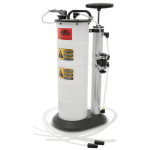
For those without drain plugs, I run them to warm up the oil, then use a suction gun to remove the oil through the dipstick tube.
I do not "flush out" the bottom of the sump or flip an engine because the disrupts the break-in/wear-in sludge that has accumulated since the engine was new.
If anything, I will perform two oil changes back-to-back with short run times in between. Oil is cheap compared to them having to buy new equipment every few years.
Also, in our day and age, much of equipment does not get used nearly as much as it once was. There are hardly any young kids out hustling to cut small yards like there used to be. Back in the 70's, I push mowed a lot of yards. Very few people owned riders and self-propelled walk behind mowers were considered a luxury
I am not trying to convince anyone to change their ways, only to be aware of what I have seen happen before.
Engine break-in/ wear-in sediment is a normal expectation, so there will be fine sediment (break-in sludge) that settles and builds up in the bottom of the crankcase sump.
In a splash oiled engine such as a push mower, go-cart, small generator, snow blower or tiller, that break-in sludge gradually builds up in the bottom of the engine and remains there dormant unless it is disturbed.
Manufacturers have eliminated the drain plug on most vertical engine designs of 6HP or less to eliminate machining cost for a drain plug that people seldom used anyway.
Manufacturers like Briggs and Stratton even claim that the initial oil put into their smaller EXI series vertical engines when new is considered "lifetime" and to check and only add new oil as needed. Basically, that means run it until it wears out, then throw it away and buy another.
Several of my more proactive maintenance-oriented clients still believe in annual oil servicing to prolong the life of their investment, even on the cheaper box store "toys" they purchased.
For those without drain plugs, I run them to warm up the oil, then use a suction gun to remove the oil through the dipstick tube.
I do not "flush out" the bottom of the sump or flip an engine because the disrupts the break-in/wear-in sludge that has accumulated since the engine was new.
If anything, I will perform two oil changes back-to-back with short run times in between. Oil is cheap compared to them having to buy new equipment every few years.
Also, in our day and age, much of equipment does not get used nearly as much as it once was. There are hardly any young kids out hustling to cut small yards like there used to be. Back in the 70's, I push mowed a lot of yards. Very few people owned riders and self-propelled walk behind mowers were considered a luxury
"....initial oil put into their smaller EXI series vertical engines when new is considered "lifetime" and to check and only add new oil as needed. Basically, that means run it until it wears out, then throw it away and buy another." "Engineering" retards just love "lifetime" crap. 111 hours equates to 5000 miles at 45 mph. By that time the additive package is gone. Add the higher temps of air cooling and "lifetime" starts looking rather short.Hi Rivets,
I am not trying to convince anyone to change their ways, only to be aware of what I have seen happen before.
Engine break-in/ wear-in sediment is a normal expectation, so there will be fine sediment (break-in sludge) that settles and builds up in the bottom of the crankcase sump.
In a splash oiled engine such as a push mower, go-cart, small generator, snow blower or tiller, that break-in sludge gradually builds up in the bottom of the engine and remains there dormant unless it is disturbed.
Manufacturers have eliminated the drain plug on most vertical engine designs of 6HP or less to eliminate machining cost for a drain plug that people seldom used anyway.
Manufacturers like Briggs and Stratton even claim that the initial oil put into their smaller EXI series vertical engines when new is considered "lifetime" and to check and only add new oil as needed. Basically, that means run it until it wears out, then throw it away and buy another.
Several of my more proactive maintenance-oriented clients still believe in annual oil servicing to prolong the life of their investment, even on the cheaper box store "toys" they purchased.
For those without drain plugs, I run them to warm up the oil, then use a suction gun to remove the oil through the dipstick tube.
I do not "flush out" the bottom of the sump or flip an engine because the disrupts the break-in/wear-in sludge that has accumulated since the engine was new.
If anything, I will perform two oil changes back-to-back with short run times in between. Oil is cheap compared to them having to buy new equipment every few years.
Also, in our day and age, much of equipment does not get used nearly as much as it once was. There are hardly any young kids out hustling to cut small yards like there used to be. Back in the 70's, I push mowed a lot of yards. Very few people owned riders and self-propelled walk behind mowers were considered a luxury
Auto Doc's
Lawn Addict
Hello RevB,
I recall having breakfast with a couple of buddies a few months ago and one of them (non-mechanic type) was bragging about how he no longer had to change his oil as often because he was using "High Mileage" oil.
In his mind he thought that meant he did not have to check it either. Needless to say, he just had his engine replaced last week because the connecting rods were knocking.
As for mechanical engineers, they are well versed on design materials and "predetermined failure rates". They are well educated, but the accountants ("bean counters") push them to minimize design standards (Why use steel when plastic or "pig metal" can be used in its place). In the end, cheaper, lighter and high wear components find their way onto the final product.
Imagine what it would cost today for them to actually build a (super reliable) rider model similar to the 1980's Snapper RER (series 6)? It would likely cost around 10K or more each and that is not including adding on all the (foo foo) safety devices now required.
Anyway, I'm getting off the subject....
Should a little oil be put in the cylinder of a new engine before starting? It will not harm anything, but it will smoke lightly for the first few minutes. Is it required? From my experience, No.
When the engines are assembled, there is already a light film of oil on all of the internal parts to aid with assembly, but also to prevent corrosion from setting in.
I recall having breakfast with a couple of buddies a few months ago and one of them (non-mechanic type) was bragging about how he no longer had to change his oil as often because he was using "High Mileage" oil.
In his mind he thought that meant he did not have to check it either. Needless to say, he just had his engine replaced last week because the connecting rods were knocking.
As for mechanical engineers, they are well versed on design materials and "predetermined failure rates". They are well educated, but the accountants ("bean counters") push them to minimize design standards (Why use steel when plastic or "pig metal" can be used in its place). In the end, cheaper, lighter and high wear components find their way onto the final product.
Imagine what it would cost today for them to actually build a (super reliable) rider model similar to the 1980's Snapper RER (series 6)? It would likely cost around 10K or more each and that is not including adding on all the (foo foo) safety devices now required.
Anyway, I'm getting off the subject....
Should a little oil be put in the cylinder of a new engine before starting? It will not harm anything, but it will smoke lightly for the first few minutes. Is it required? From my experience, No.
When the engines are assembled, there is already a light film of oil on all of the internal parts to aid with assembly, but also to prevent corrosion from setting in.
What? My bad, I have a Honda HRN 216 VKADI run a couple of passes of Forney Super Wear weld across the face of new blade edges that have been preground to a flat edge and grind back to a tapered profile. Much better wear resistance at 65 Rockwell than the 38 to 45 Rockwell of most carbon steel blades. You could also heat and temper to 65 RC as long as you can accurately estimate steel temps and have a suitable oil quench. Yes, can get more brittle but if you're not running in a rock infested area or other type of minefield they will last much longer.