Enigma, I've just always balanced them with the screwdriver -- I never even knew there was a tool for this. But as cheap as they are and if it helps maintain the spindle I'd buy one. What kind do you use and how much are they?I have one of those type balancers, bought years ago. They are by far the most accurate and best way to balance a blade.
Blade balance main purpose is to help the bearings in the spindle to last longer.
Interestingly, I've found brand new blades that come unbalanced.
Is it necessary? Not really, the blade will spin just as well balanced or unbalanced. But, an unbalanced blade does not cut as well, causes more vibration and puts a lot more stress on the spindles.
I balance mine simply because its fast and easy and is better for the mower deck.

You are using an out of date browser. It may not display this or other websites correctly.
You should upgrade or use an alternative browser.
You should upgrade or use an alternative browser.
Do I actually need a blade balance?
- Thread starter BackyardBrian
- Start date
Nobody is setting the cone offset. It's a nail. You can't ( well I assume most won't but there will be those who try) set a cone offset to the blade hole.So the Cone is at the Other edge. 3/16" difference from centre.. Still centre of weight distrubution. It's not the Space Shuttle per "Terryl". !
Skippydiesel
Well-Known Member
Okay - What is your rational for the regular sharpening of blades??I've seen bad advice before....this is at the top.

Skippydiesel
Well-Known Member
Interesting;
Balancing
I think we all agree its desirable to keep vibration to a minimum, consistent with the usually low quality construction of most mowers and the likelihood that the balance will deteriorate in work, due to damage and material build up.
There is no doubt that reasonable well balanced blades will reduce vibration.
Being obsessive with blade balance, is unlikely to delivery any benefit beyond the personal satisfaction of the person doing the balancing - a nail on the wall / screw driver in a vice will achieve a satisfactory results. A purpose made balancing device may improve on this slightly but is the result worth the extra dollars & time? - I say no.
Sharpening
It would seem we have divided into two camps The regular Sharpeners ( larger camp) and the Don't routinely sharpen (smaller camp).
Its all about personal choice. Go with your gut. Go with science.
Balancing
I think we all agree its desirable to keep vibration to a minimum, consistent with the usually low quality construction of most mowers and the likelihood that the balance will deteriorate in work, due to damage and material build up.
There is no doubt that reasonable well balanced blades will reduce vibration.
Being obsessive with blade balance, is unlikely to delivery any benefit beyond the personal satisfaction of the person doing the balancing - a nail on the wall / screw driver in a vice will achieve a satisfactory results. A purpose made balancing device may improve on this slightly but is the result worth the extra dollars & time? - I say no.
Sharpening
It would seem we have divided into two camps The regular Sharpeners ( larger camp) and the Don't routinely sharpen (smaller camp).
- For the most part the Sharpeners have given few reasons for their position asides from the occasional anecdote eg the wife likes it.
- The Don't have tried to be scientific in their opinion (blades cut by primarily by impact). Acknowledge sharp blades require less power so the mower can cut quicker or use less fuel per hour. Unfortunatly, sharp blades loose their edge very quickly when in work, so back to impact cutting ie short term benefit for little gain. Regular sharpening accelerates wear (replacement cost) and may require rebalancing (time). So it all comes down to the Law of Diminishing Returns
Its all about personal choice. Go with your gut. Go with science.
Last edited:
Gord Baker
Well-Known Member
This is the contact info for Tarylfixesall.com
[email protected]
[email protected]
We've all had different experiences, I'd like to relate mine. Been in the grass mowing business for about 10 years now. I change my blades almost every day. I find that a shape, balanced blade cuts faster, more evenly. Yes, intelligence tells us unbalanced blades will wear out the spindles, but I will never find out. But they do cause vibration. A friend bought a new mower, had vibration issues. I had him bring mower over, removed the blades, touched up the sharpness, and balanced them. Smooth as silk afterwards. A sharp blade cuts the grass, a dull blade rips it. I can look at a just mowed lawn and tell the difference. As a certified pesticide applicator, have "read" that unevenly cut, ripped grass is more prone to disease. Don't know that I have seen that. But I think that sharpening them after cutting 3-4 lawns gives me more life to them. Doesn't take much to resharpen them at that point. BTW, 19 out of 20 brand new blades I buy are out of balance, they aren't balanced in production.Alright so a couple weeks in with the X350 and Im already down the rabbit hole of blade care lol. Cut looked a little uneven last mow and figured its time to pull em, sharpen, put em back.
Watched a bunch of vids and now Im more confused than when I started. Half the guys say just stick a screwdriver through the center hole, eyeball it, if one side dips down grind that side till it sits level. Other half swear you need an actual balancer or the vibration will kill your spindles over time.
Then I came across this blade balancer. Its magnetic, mounts on the wall, you set the blade on the cone and it tells you which side is heavy. Looks way more accurate than the screwdriver trick but part of me wonders if Im overthinkin it for a homeowner rig thats only cuttin 1.5 acres. Or should I just skip the whole sharpen and balance thing and drop a fresh set of blades on instead? Wanna hear what you guys actually do.
And yes, the tip is what cuts the grass. That's why the first 3/4" (variable length dependent on many factors) is worn, and rounded. I calculated (ex-accident investigator) that if the mower is going 10MPH, blades spinning at 3600 RPM, the distance the mower will move from the time one tip of the blade is at a point, the mower goes about a hundredth of a foot till the other tip gets to the same point. So yes, the tip does almost all of the cutting. I also learned that the tip must be at a right angle, or close to it, to cut properly. If the tip is rounded, it won't cut the grass good. I noticed a big difference when I insured the tip was sharp and pointed.
Skippydiesel
Well-Known Member
A sharp blade cuts the grass, a dull blade rips it. "
No one doubts that a sharp blade will cut cleaner and with less hp. The question are ( for the average lawn), will the benefit
As stated - the blade cuts by impact. In doing so it severs the grass leaf. A narrow/sharp blades will concentrate the energy of the cut (kg/area squared or lb/square inch) A blunt blade will deliver the same energy over a slightly larger area & use slightly more energy to achieve the same result ie . Both will sever (mow) the grass blade.
I have no doubt that the enthusiastic law mowing person, will think nothing of the time taken to repeatedly sharpen the blades, or the accelerated wear, that will shorten the service life of the blades. If thats what it costs to deliver the satisfaction - go for it!
If on the other hand you are not obsessed with the appearance of your lawn, just want a neet result with minimal effort & cost - keep the sharpening down to a minimum. I can't tell you what this is, because there are to many variables eg soil type (abrasion) lawn type, which may also wear blades more quickly and how the rest of your machine is operating eg is the engine delivering optimum rpm so that the blades will cut most efficiently..
My blades, cutting predominantly Kikuyu grass, on clay soil, last about 3 seasons - with no sharpening or after installation balancing (subject to not incurring damage eg rock strike).
It seem sto me that choose who want to cut the grass, as apposed to bash it off, should use a cylinder type or reciprocating blade mower where the sward is sheered between blades or stationary edge
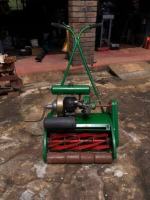
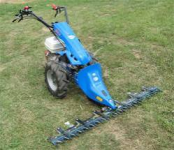
No one doubts that a sharp blade will cut cleaner and with less hp. The question are ( for the average lawn), will the benefit
- Be significant in the speed of cut & the fuel used? - I say no.
- Deliver a noticeable difference in cut quality (aesthetics) 1-2 days after the being cut. (The 2 days is just off the top of my head)? - I say no.
As stated - the blade cuts by impact. In doing so it severs the grass leaf. A narrow/sharp blades will concentrate the energy of the cut (kg/area squared or lb/square inch) A blunt blade will deliver the same energy over a slightly larger area & use slightly more energy to achieve the same result ie . Both will sever (mow) the grass blade.
I have no doubt that the enthusiastic law mowing person, will think nothing of the time taken to repeatedly sharpen the blades, or the accelerated wear, that will shorten the service life of the blades. If thats what it costs to deliver the satisfaction - go for it!
If on the other hand you are not obsessed with the appearance of your lawn, just want a neet result with minimal effort & cost - keep the sharpening down to a minimum. I can't tell you what this is, because there are to many variables eg soil type (abrasion) lawn type, which may also wear blades more quickly and how the rest of your machine is operating eg is the engine delivering optimum rpm so that the blades will cut most efficiently..
My blades, cutting predominantly Kikuyu grass, on clay soil, last about 3 seasons - with no sharpening or after installation balancing (subject to not incurring damage eg rock strike).
It seem sto me that choose who want to cut the grass, as apposed to bash it off, should use a cylinder type or reciprocating blade mower where the sward is sheered between blades or stationary edge
Last edited:
GearHead36
Well-Known Member
I asked Grok about long term (a season or more) effects of blade sharpness. Here's the reply,
### What longer-term observations and studies show
The immediate difference (clean slice vs. ragged tear) compounds over a season:
- **Turf health and appearance**: Repeated mowing with dull blades produces chronically frayed leaf tips. These tips desiccate and turn brown more readily, giving the lawn a persistent grayish or brownish cast even when the grass is otherwise healthy. Sharp-blade plots maintain a cleaner green color longer between mowings.
- **Disease susceptibility**: Torn tissue provides entry points for pathogens. Extension literature and turf pathology references note higher incidence of leaf-spot and other foliar diseases when grass is regularly shredded rather than cleanly cut. Over a season this can show up as more thinning or more frequent fungicide needs in susceptible varieties.
- **Recovery and density**: Clean cuts allow faster healing and less stress. Lawns mowed with sharp blades generally recover quicker after each cut and can maintain better density, especially under higher mowing frequencies or in heat/drought stress periods.
- **Water and nutrient use**: Stressed, torn tissue increases water loss from the leaf tips and can slightly elevate overall plant stress. Over many weeks this contributes to a lawn that looks drier or requires more water to stay presentable.
- **Clipping behavior and thatch**: Dull blades tend to leave longer, more ragged clippings that are slower to break down and more prone to clumping. Over a season this can affect surface cleanliness and, in some cases, contribute to surface thatch accumulation if clippings are left.
These effects are cumulative. A single dull mowing looks bad for a few days; repeated dull mowings over months produce a lawn that simply never looks as sharp or healthy as one cut with maintained blades.
### Sources of longer-term evidence
- University turfgrass research and extension publications (many land-grant universities) routinely recommend frequent sharpening precisely because of season-long effects on color, disease, and stress tolerance. They treat blade sharpness as a basic cultural practice alongside height, frequency, and fertility.
- Golf-course and sports-turf management literature emphasizes daily or near-daily sharpening/reels maintenance on precision surfaces; the rationale is long-term turf quality and reduced disease pressure, not just the look of the immediate cut.
- Side-by-side observational trials and grower reports (less formal but consistent) show that properties maintained with regular blade sharpening look better late in the season and require less corrective work.
- Manufacturer and industry guidance (Cub Cadet, Toro, John Deere, etc.) frames sharpening as essential for sustained cut quality and turf health across the mowing season.
Pure multi-month controlled academic studies that isolate *only* blade sharpness while holding every other variable constant are relatively uncommon (turf research usually bundles cultural practices), but the physiological mechanism is straightforward and the practical consensus across researchers, extension agents, and professional managers is strong.
Regular sharpening (or timely replacement) is one of the higher-leverage, lower-cost practices for season-long appearance and plant health.
### What longer-term observations and studies show
The immediate difference (clean slice vs. ragged tear) compounds over a season:
- **Turf health and appearance**: Repeated mowing with dull blades produces chronically frayed leaf tips. These tips desiccate and turn brown more readily, giving the lawn a persistent grayish or brownish cast even when the grass is otherwise healthy. Sharp-blade plots maintain a cleaner green color longer between mowings.
- **Disease susceptibility**: Torn tissue provides entry points for pathogens. Extension literature and turf pathology references note higher incidence of leaf-spot and other foliar diseases when grass is regularly shredded rather than cleanly cut. Over a season this can show up as more thinning or more frequent fungicide needs in susceptible varieties.
- **Recovery and density**: Clean cuts allow faster healing and less stress. Lawns mowed with sharp blades generally recover quicker after each cut and can maintain better density, especially under higher mowing frequencies or in heat/drought stress periods.
- **Water and nutrient use**: Stressed, torn tissue increases water loss from the leaf tips and can slightly elevate overall plant stress. Over many weeks this contributes to a lawn that looks drier or requires more water to stay presentable.
- **Clipping behavior and thatch**: Dull blades tend to leave longer, more ragged clippings that are slower to break down and more prone to clumping. Over a season this can affect surface cleanliness and, in some cases, contribute to surface thatch accumulation if clippings are left.
These effects are cumulative. A single dull mowing looks bad for a few days; repeated dull mowings over months produce a lawn that simply never looks as sharp or healthy as one cut with maintained blades.
### Sources of longer-term evidence
- University turfgrass research and extension publications (many land-grant universities) routinely recommend frequent sharpening precisely because of season-long effects on color, disease, and stress tolerance. They treat blade sharpness as a basic cultural practice alongside height, frequency, and fertility.
- Golf-course and sports-turf management literature emphasizes daily or near-daily sharpening/reels maintenance on precision surfaces; the rationale is long-term turf quality and reduced disease pressure, not just the look of the immediate cut.
- Side-by-side observational trials and grower reports (less formal but consistent) show that properties maintained with regular blade sharpening look better late in the season and require less corrective work.
- Manufacturer and industry guidance (Cub Cadet, Toro, John Deere, etc.) frames sharpening as essential for sustained cut quality and turf health across the mowing season.
Pure multi-month controlled academic studies that isolate *only* blade sharpness while holding every other variable constant are relatively uncommon (turf research usually bundles cultural practices), but the physiological mechanism is straightforward and the practical consensus across researchers, extension agents, and professional managers is strong.
Regular sharpening (or timely replacement) is one of the higher-leverage, lower-cost practices for season-long appearance and plant health.
Skippydiesel
Well-Known Member
"I asked Grok about long term (a season or more) effects of blade sharpness."
99% of that just doesn't even make sense, defies logic.I have rarely seen such a load of rubbish, purporting to be a scientific study.
Most grasses have evolved to recover quickly from grazing. When an animal grazes, it does not cleanly cut the grass blade, it crushes & tares (many grazers have no /upper front teeth. The lower jaw teeth simply clamps the grass to the upper jaw gum. The animal then tares the grass with a small movement of its head.
I don't see the the great grasslands of the World dying back due to disease/stress, caused by grazing.
Specialist lawns (bowling & golfing greens, etc) usually very short sward, are mown with cylinder type mowers. This type of power cuts by shearing, rather than the impact cut of a horizontal blade. The drum mower blades must be sharp to effectively cut/mow, the horizontal cutting by impact dont need to be. For the horizontal, blade tip speed is the critical factor, not sharpness - its called physics.
99% of that just doesn't even make sense, defies logic.I have rarely seen such a load of rubbish, purporting to be a scientific study.
Most grasses have evolved to recover quickly from grazing. When an animal grazes, it does not cleanly cut the grass blade, it crushes & tares (many grazers have no /upper front teeth. The lower jaw teeth simply clamps the grass to the upper jaw gum. The animal then tares the grass with a small movement of its head.
I don't see the the great grasslands of the World dying back due to disease/stress, caused by grazing.
Specialist lawns (bowling & golfing greens, etc) usually very short sward, are mown with cylinder type mowers. This type of power cuts by shearing, rather than the impact cut of a horizontal blade. The drum mower blades must be sharp to effectively cut/mow, the horizontal cutting by impact dont need to be. For the horizontal, blade tip speed is the critical factor, not sharpness - its called physics.
Last edited:

rickfischer51
Member
First, you can get that balancer for $28 on amazon. Second, how old are you? If you're my age, maybe its not worth it. If you're half my age, maybe it is. There are other balancers out there. The cone balances are useless. The nail in a garage stud is actually better. Third, in my experience blades don't just go out of balance. Balance suffers when you grind the crap out of them tyring to take out huge knicks. I smooth them out, but to get rid of the gaps, you gotta grind the crap out of them, which is bad. An occasional ding is irrelevant with a spinning blade. Manuals say don't grind them sharp. Leave a 1/16" edge. Take the blades and stack them together. If they don't nest together nicely, at least one needs to be replaced. There is a second order imbalance if a blade is bent out of plane. Plus it cuts like crap. Dont try to straighten it. You can't. Just my 2 cents. Your results may vary.Alright so a couple weeks in with the X350 and Im already down the rabbit hole of blade care lol. Cut looked a little uneven last mow and figured its time to pull em, sharpen, put em back.
Watched a bunch of vids and now Im more confused than when I started. Half the guys say just stick a screwdriver through the center hole, eyeball it, if one side dips down grind that side till it sits level. Other half swear you need an actual balancer or the vibration will kill your spindles over time.
Then I came across this blade balancer. Its magnetic, mounts on the wall, you set the blade on the cone and it tells you which side is heavy. Looks way more accurate than the screwdriver trick but part of me wonders if Im overthinkin it for a homeowner rig thats only cuttin 1.5 acres. Or should I just skip the whole sharpen and balance thing and drop a fresh set of blades on instead? Wanna hear what you guys actually do.